
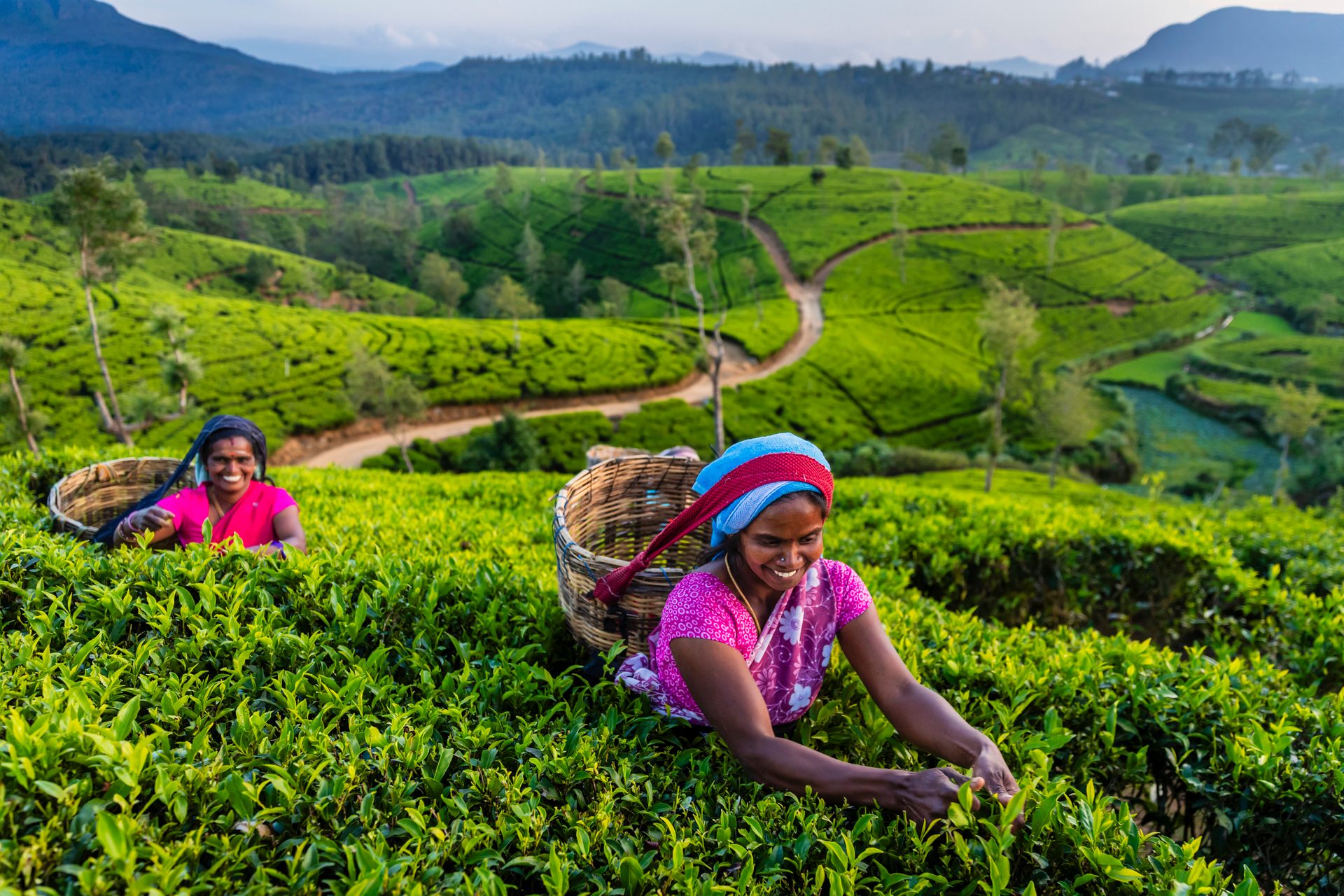
What we stand for
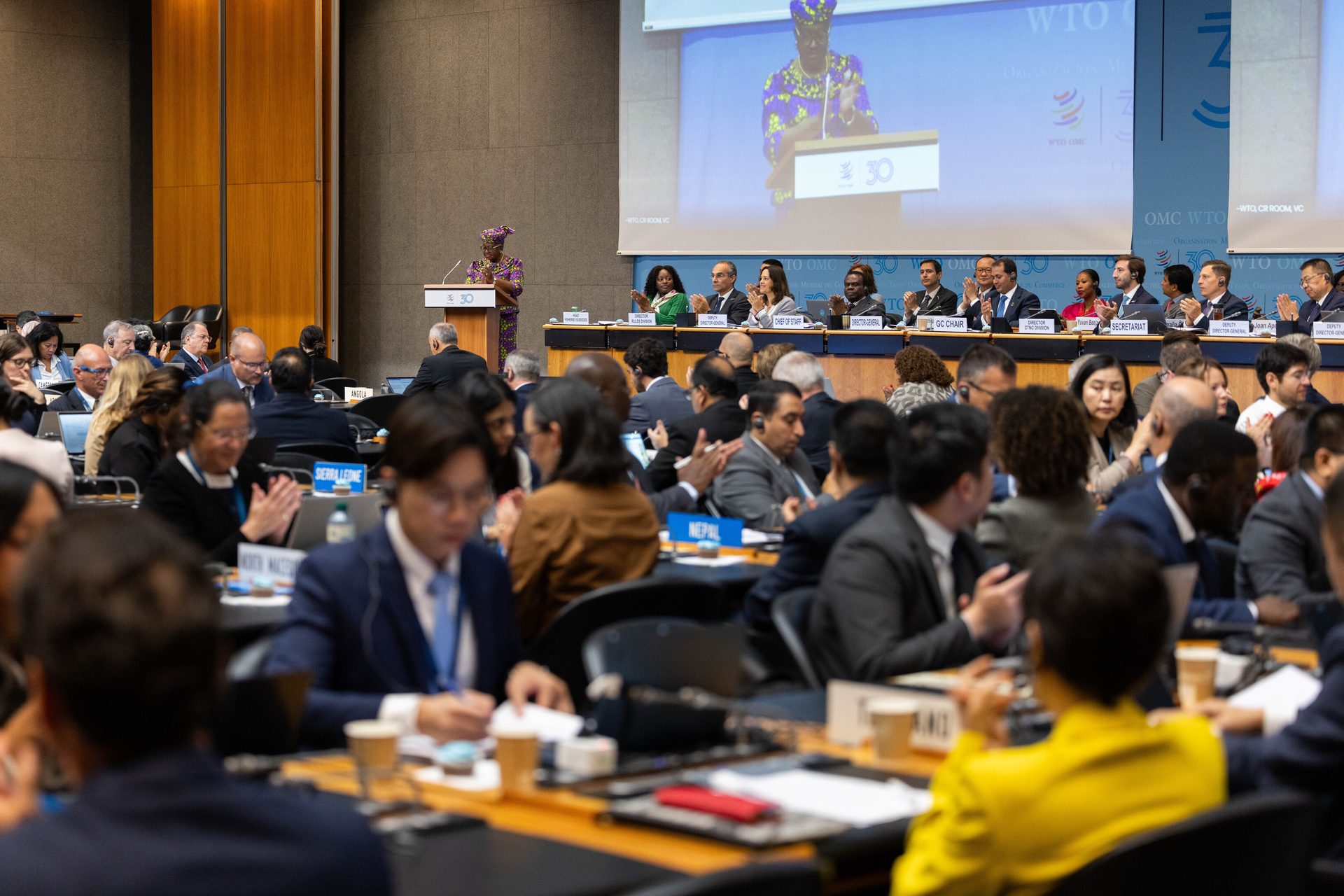
What we do
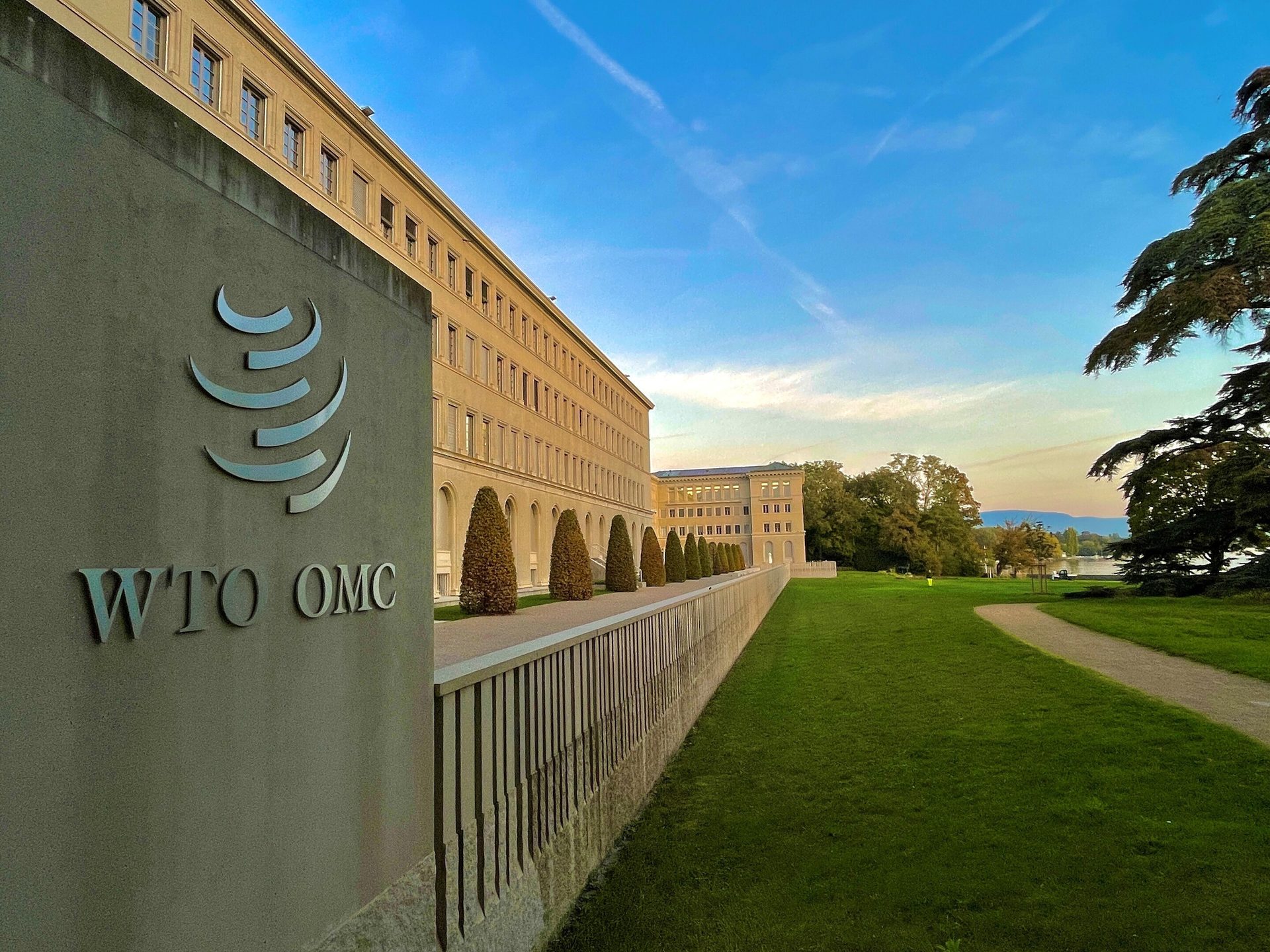
Who we are
Director-General
Dr Ngozi Okonjo-Iweala took office as WTO Director- General on 1 March 2021. She is the first woman and the first African to serve as Director-General. In November 2024, she was reappointed for a second four-year term beginning 1 September 2025.
Membership
The WTO has 166 members, accounting for 98 per cent of world trade. All members joined the system as a result of negotiations, thus membership means a balance of rights and obligations. Over 20 countries are currently negotiating to join the WTO.
Budget
The WTO derives most of the income for its annual budget from contributions by its members. These contributions are based on a formula that takes into account each member’s share of international trade.
WTO Secretariat
The WTO has approximately 620 staff on its regular budget and is headed by a Director-General. The Secretariat’s main duties are to support the WTO’s various bodies, to provide technical assistance to developing economies, monitor developments in world trade, disseminate information about WTO activities and organize ministerial conferences.
How the organization is structured
Unlike some other international organizations, power is not delegated to a board of directors or the organization’s head. The WTO’s main decision-making body is the Ministerial Conference, which meets usually every two years. The General Council, which meets regularly in Geneva, is the highest decision-making body outside of ministerial conferences.
Trade negotiations
The WTO agreements – covering goods, services and intellectual property – are not static; they are altered from time to time and new agreements can be added to the package. Changes to the rules of trade require the agreement of all WTO members, who must reach consensus through negotiations.
Implementation and monitoring
WTO agreements require governments to make their trade policies transparent by notifying the WTO about laws in force and measures adopted. Various WTO bodies seek to ensure these requirements are being followed and that WTO agreements are being properly implemented.
Dispute settlement
The WTO’s procedures for resolving trade disputes are vital for enforcing the rules and for ensuring trade flows smoothly. WTO members bring disputes to the WTO if they think their rights under the agreements are being infringed. Rulings by independent experts are based on interpretations of the agreements and members’ commitments.
Building trade capacity
WTO agreements contain special provisions for developing economies, including longer time periods to implement agreements, and support to help them build their trade capacity. The WTO organizes hundreds of training activities for developing economies annually.
Outreach
The WTO maintains regular dialogue with non-governmental organizations, parliamentarians, other international organizations, the business sector, universities and the general public on various aspects of the WTO, with the aim of enhancing cooperation and increasing awareness of WTO activities.
Improving people’s lives
The fundamental goal of the WTO is to improve the welfare of people around the world. The WTO’s founding Agreement recognizes that trade should be conducted with a view to raising standards of living, ensuring full employment and increasing real income.
Opening trade
The WTO seeks to ensure that trade flows as smoothly, predictably and freely as possible, such as by lowering trade barriers, including customs duties – or tariffs – and measures such as import bans.
Inclusive trade
The WTO seeks to build a more inclusive trading system to allow more women and small businesses to participate in global trade. It also recognizes the importance of addressing the digital divide so that more economies can benefit from the digital economy.
Fair competition
“Unfair” practices, such as export subsidies and dumping products at below normal value to gain market share, are discouraged. WTO rules try to establish what is fair or unfair and how governments can respond.
Non-discrimination
Under WTO rules, a WTO member should not discriminate between its trading partners, and should not discriminate between its own and foreign products, services or citizens.
Predictability
and transparency
Foreign companies, investors and governments should be confident that trade barriers will not be raised arbitrarily. With stability and predictability provided by WTO rules, investment is encouraged, jobs are created and consumers can enjoy the benefits of competition, such as lower prices.
Support for
less developed economies
Over three-quarters of WTO members are developing economies. The WTO agreements give them transition periods to adjust to WTO provisions and, in certain cases, provide for practical support for implementation of the agreement.
Protection of the environment
Protection and preservation of the environment are fundamental goals of the WTO. The WTO agreements permit members to take measures to protect public, animal and plant health and the environment.
Partnerships
The WTO maintains regular dialogue with civil society, labour unions, universities, the business community and other intergovernmental organizations to enhance cooperation and build partnerships.
What we stand for
Improving people’s lives
The fundamental goal of the WTO is to improve the welfare of people around the world. The WTO’s founding Agreement recognizes that trade should be conducted with a view to raising standards of living, ensuring full employment and increasing real income.
Opening trade
The WTO seeks to ensure that trade flows as smoothly, predictably and freely as possible, such as by lowering trade barriers, including customs duties – or tariffs – and measures such as import bans.
Inclusive trade
The WTO seeks to build a more inclusive trading system to allow more women and small businesses to participate in global trade. It also recognizes the importance of addressing the digital divide so that more economies can benefit from the digital economy.
Fair competition
“Unfair” practices, such as export subsidies and dumping products at below normal value to gain market share, are discouraged. WTO rules try to establish what is fair or unfair and how governments can respond.
Non-discrimination
Under WTO rules, a WTO member should not discriminate between its trading partners, and should not discriminate between its own and foreign products, services or citizens.
Predictability
and transparency
Foreign companies, investors and governments should be confident that trade barriers will not be raised arbitrarily. With stability and predictability provided by WTO rules, investment is encouraged, jobs are created and consumers can enjoy the benefits of competition, such as lower prices.
Support for
less developed economies
Over three-quarters of WTO members are developing economies. The WTO agreements give them transition periods to adjust to WTO provisions and, in certain cases, provide for practical support for implementation of the agreement.
Protection of the environment
Protection and preservation of the environment are fundamental goals of the WTO. The WTO agreements permit members to take measures to protect public, animal and plant health and the environment.
Partnerships
The WTO maintains regular dialogue with civil society, labour unions, universities, the business community and other intergovernmental organizations to enhance cooperation and build partnerships.
What we do
Trade negotiations
The WTO agreements – covering goods, services and intellectual property – are not static; they are altered from time to time and new agreements can be added to the package. Changes to the rules of trade require the agreement of all WTO members, who must reach consensus through negotiations.
Implementation and monitoring
WTO agreements require governments to make their trade policies transparent by notifying the WTO about laws in force and measures adopted. Various WTO bodies seek to ensure these requirements are being followed and that WTO agreements are being properly implemented.
Dispute settlement
The WTO’s procedures for resolving trade disputes are vital for enforcing the rules and for ensuring trade flows smoothly. WTO members bring disputes to the WTO if they think their rights under the agreements are being infringed. Rulings by independent experts are based on interpretations of the agreements and members’ commitments.
Building trade capacity
WTO agreements contain special provisions for developing economies, including longer time periods to implement agreements, and support to help them build their trade capacity. The WTO organizes hundreds of training activities for developing economies annually.
Outreach
The WTO maintains regular dialogue with non-governmental organizations, parliamentarians, other international organizations, the business sector, universities and the general public on various aspects of the WTO, with the aim of enhancing cooperation and increasing awareness of WTO activities.
What we are
Director-General
Dr Ngozi Okonjo-Iweala took office as WTO Director- General on 1 March 2021. She is the first woman and the first African to serve as Director-General. In November 2024, she was reappointed for a second four-year term beginning 1 September 2025.
Membership
The WTO has 166 members, accounting for 98 per cent of world trade. All members joined the system as a result of negotiations, thus membership means a balance of rights and obligations. Over 20 countries are currently negotiating to join the WTO.
Budget
The WTO derives most of the income for its annual budget from contributions by its members. These contributions are based on a formula that takes into account each member’s share of international trade.
WTO Secretariat
The WTO has approximately 620 staff on its regular budget and is headed by a Director-General. The Secretariat’s main duties are to support the WTO’s various bodies, to provide technical assistance to developing economies, monitor developments in world trade, disseminate information about WTO activities and organize ministerial conferences.
How the organization is structured
Unlike some other international organizations, power is not delegated to a board of directors or the organization’s head. The WTO’s main decision-making body is the Ministerial Conference, which meets usually every two years. The General Council, which meets regularly in Geneva, is the highest decision-making body outside of ministerial conferences.
Message from Director General
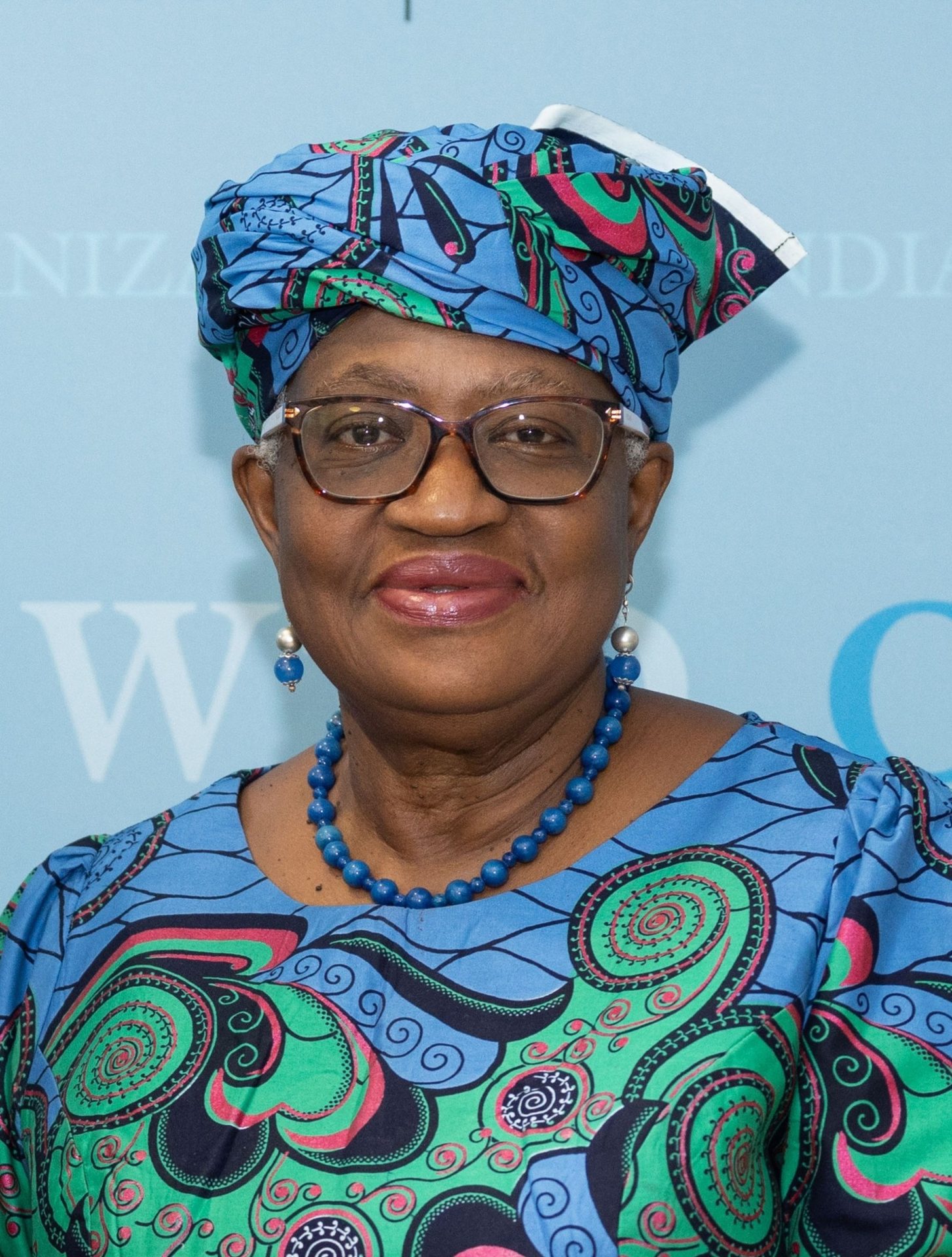
Dr Ngozi Okonjo-Iweala
The global trading system continues to face challenges on a scale unseen since it was established 80 years ago in the wake of the Second World War. Alongside rapid technological change and rising geopolitical tensions, the world seems to move from one crisis to the next, with recent conflicts from the war in Ukraine to the Iran war having major effects on the prices and availability of energy, food and other vital commodities.
And yet global trade showed considerable resilience in 2025, the main period covered by this report, which provides an overview of WTO activities over the past year. World merchandise trade grew by 4.6 per cent, in volume terms, as a surge in demand for AI-related goods offset the negative impact of tariff increases and trade policy uncertainty. Services trade grew by 5.3 per cent, also in volume terms. The value of global goods and services trade, on a balance-of-payments basis, reached a record high US$ 34.65 trillion in 2025, up 7 per cent year-on-year. WTO rules continue to play an important role in underpinning this resilience: around 72 per cent of global goods trade continues to flow on the core most-favoured-nation tariff terms members commit to at the WTO.
Read More
Overview
World trade remained resilient in 2025 despite geopolitical tensions.
In a further sign of resilience, 72 per cent of world trade continues to be conducted under the WTO’s most-favoured-nation terms, whereby all trading partners are treated equally.

A landmark achievement in 2025 was the entry into force of the WTO Agreement on Fisheries Subsidies following ratification of the Agreement by two-thirds of WTO members. It is the first WTO agreement with environmental sustainability at its core.

The 14th Ministerial Conference (MC14) in Cameroon in March 2026 saw ministers adopt decisions on fisheries subsidies, small economies, and special and differential treatment for developing economies.
They also came close to decisions on WTO reform and e-commerce, with discussions continuing in Geneva.

At MC14, more than 60 WTO members representing some 70 per cent of global trade adopted a pathway to bring into force the Agreement on E-Commerce through interim arrangements. .

increase in merchandise trade volume
AI-related goods
Driven by a surge in demand for
increase in trade in commercial services



Global trade developments
The strong growth in merchandise trade reflects a surging demand for AI-related goods, which offset the negative impacts of higher tariffs and increased trade policy uncertainty. In value terms, merchandise trade increased by 7 per cent to US$ 26.26 trillion, while commercial services trade rose 8 per cent to US$ 9.56 trillion. More moderate trade expansion is expected for 2026 due to the impact of the conflict in the Middle East, among other factors.
Read More
14th WTO Ministerial Conference
The conference in Yaoundé, Cameroon, concluded on 30 March 2026 with the adoption of decisions relating to fisheries subsidies, small economies, and special and differential treatment for developing economies. Ministers came close to adopting texts on WTO reform and e-commerce but could not reach consensus. Discussions on outstanding issues are continuing in Geneva.
Read More
World trade success stories
Modernizing cotton production in Bhutan, Bangladesh’s semi-conductor boom, opportunities for women entrepreneurs in Burkina Faso's mango sector, and innovative cocoa export projects in Latin America and the Caribbean.
Read More
In the spotlight





of global fish stocks were overfished
in 2021, compared to 10% in 1974.

people worldwide depend on fish for
their livelihoods.

in estimated governmental subsidies to marine fishing activities globally every year.

members have deposited their instrument of
acceptance of the Agreement with the WTO,
as of end-May 2026.

has been pledged to the WTO Fish Fund
by 17 members to date.
Fisheries subsidies
The WTO Agreement on Fisheries Subsidies commits WTO members to curb billions of dollars in annual spending on the most harmful subsidies that contribute to the depletion of marine fish stocks. Its aim is to support the sustainable future of our oceans and to protect the livelihoods of fishing communities around the world.
1
st
The WTO's first
multilateral
agreement with
environmental
sustainability
at its core.
of global fish stocks were overfished in 2021, compared to 10% in 1974.
people worldwide depend on fish for their livelihoods.
in estimated governmental subsidies to marine fishing activities globally every year.
members have deposited their instrument of acceptance of the Agreement with the WTO, as of end-May 2026.
has been pledged to the WTO Fish Fund by 17 members to date.
Fisheries subsidies
The WTO Agreement on Fisheries Subsidies commits WTO members to curb billions of dollars in annual spending on the most harmful subsidies that contribute to the depletion of marine fish stocks. Its aim is to support the sustainable future of our oceans and to protect the livelihoods of fishing communities around the world.
1
st
The WTO's first
multilateral
agreement with
environmental
sustainability
at its core.

Timeline
June 2022
After more than 20 years of negotiations, WTO members adopt the WTO Agreement on Fisheries Subsidies at MC12 in Geneva.
September 2025
The Agreement enters into force after two-thirds of the WTO’s 166 members submitted their instruments of acceptance.
October 2025
The WTO Fish Fund becomes fully operational and ready to support developing economies in implementing the Agreement.
November 2025
The Fish Fund approves its irst grants, totalling US$ 2.9 million.
March 2026
At MC14 in Yaoundé, ministers reaffirm their commitment to negotiating further disciplines on fisheries subsidies, with a view to making recommendations to MC15.



Timeline
December 2017
At MC11 in Buenos Aires, 71 WTO members agree to initiate exploratory work on e-commerce talks.
January 2019
76 WTO members confirm in a joint statement their intention to commence these negotiations.
July 2024
Negotiations on the Agreement conclude after five years of talks.
February/December 2025
Co-sponsors of the Agreement seek its incorporation into the WTO legal framework.
March 2026
At MC14 in Yaoundé, over 60 WTO members, covering approximately 70% of global trade, adopt pathway to bring into force the Agreement through interim arrangements.
Agreement on E-Commerce
The Agreement on Electronic Commerce establishes the first-ever set of global rules on e-commerce. Its aim is to create a more stable business environment for digital trade.
trillion
boost to global GDP by 2040 if the Agreement were implemented by all 166 WTO members.
increase in participants’ trade
and a 0.43% rise in GDP are
projected under the Agreement
of global GDP comes from digital transactions.
participating members continue to seek incorporation of the Agreement into the WTO legal framework and to encourage all WTO members to join the Agreement.