The Strait of Hormuz is one of the world’s most critical maritime chokepoints and a vital channel for international trade. Located between the Persian Gulf and the Gulf of Oman, it is a key pathway for global energy, food and fertilizer trade, linking producers and consumers with markets around the world. Disruptions to this narrow passage can have global consequences.
To better understand the trade developments related to the current situation in the Strait of Hormuz, this dedicated portal provides factual information and relevant links regarding the trade impact of shipping disruptions in the Strait, including information on trade policy responses adopted by governments to keep supply chains functioning.
In a recent opinion piece in the Financial Times, Director-General Ngozi Okonjo-Iweala said that the global response to the current Strait of Hormuz disruption has so far been more cooperative and less trade-restrictive than in previous crises. However, she warned against over-dependence on a small number of suppliers or supply routes, stressing that resilient global trade depends on diversified supply chains, open trade, and international coordination rather than countries acting alone.
News
Resources
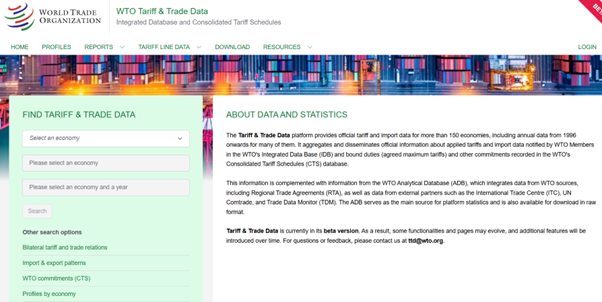
The Tariff & Trade Data platform provides official tariff and import data for over 150 economies, with historical coverage dating back to 1996 for many of them. It consolidates WTO data with information from trusted external sources and permits raw data downloads.
The platform can be accessed here.
This user guide shows users how to explore, compare, analyze and download tariff and trade data.
Features of the Tariff & Trade Data Platform include the WTO Monthly Trade Dashboard, which provides weekly updated bilateral trade data covering 120+ economies and 200+ trading partners. The dashboard offers short-term quarterly and year-to-date data by product, partner and trade flow.
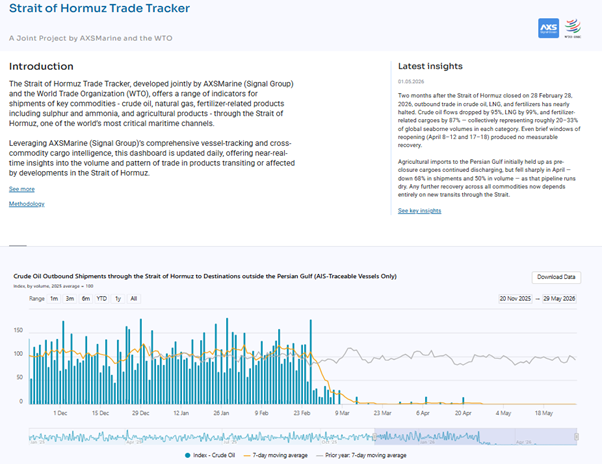
The WTO-AXSMarine Strait of Hormuz Trade Tracker offers daily, near real-time insights into key commodity flows through, or affected by developments in, the Strait of Hormuz, drawing on AXSMarine vessel-tracking data and WTO trade intelligence.
The tracker can be accessed here.
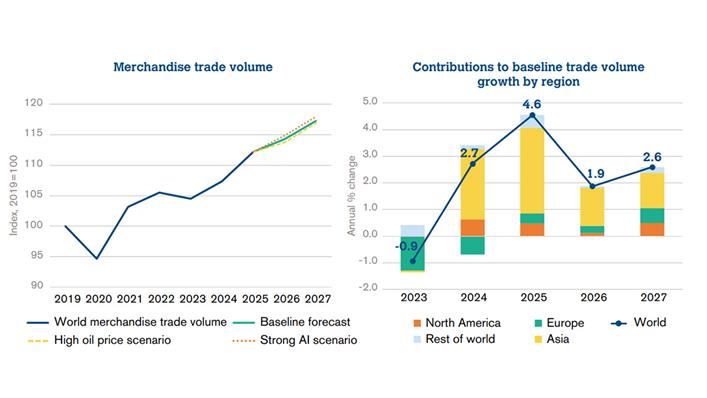
WTO economists have predicted that world trade will slow in 2026, and that the conflict in the Middle East could worsen the outlook by raising energy prices and disrupting trade flows.
The trade forecast will be updated with further analysis, including on the impact of supply disruptions in the Persian Gulf, at regular intervals.
The latest forecast can be accessed here.
The objective of the WTO trade monitoring exercise is to keep WTO members and observers informed of recent trends in the implementation of a broad range of policy measures that affect international trade. It is a transparency exercise, purely factual in nature, and has no legal effect on members’ rights and obligations. Trade and trade-related measures collected in the context of the exercise are sourced from reliable public sources, primarily official sources. The measures are recorded in the WTO's Trade Monitoring Database (TMDB) with a non-confirmed status, pending verification by the members/observers concerned.
Trade and trade-related measures collected in the context of the WTO trade monitoring exercise that have a connection to the Strait of Hormuz situation are presented below. They cover trade and trade-related measures introduced on or after 28 February 2026 affecting goods. They either explicitly refer to the Strait of Hormuz situation or may have an implicit connection through the products they cover, i.e. energy products, fertilizers, food and agricultural products. Domestic support measures and general economic support are not covered.
Charts 1 to 3 present the number of such measures implemented and terminated per week, including cumulative totals since 28 February 2026, as well as the distribution of implemented trade and trade-related measures by affected sectors and by region.
These Charts are informal situation reports intended to enhance transparency regarding trade and trade-related measures in the context of the Strait of Hormuz situation. The Charts are updated regularly by the Secretariat.
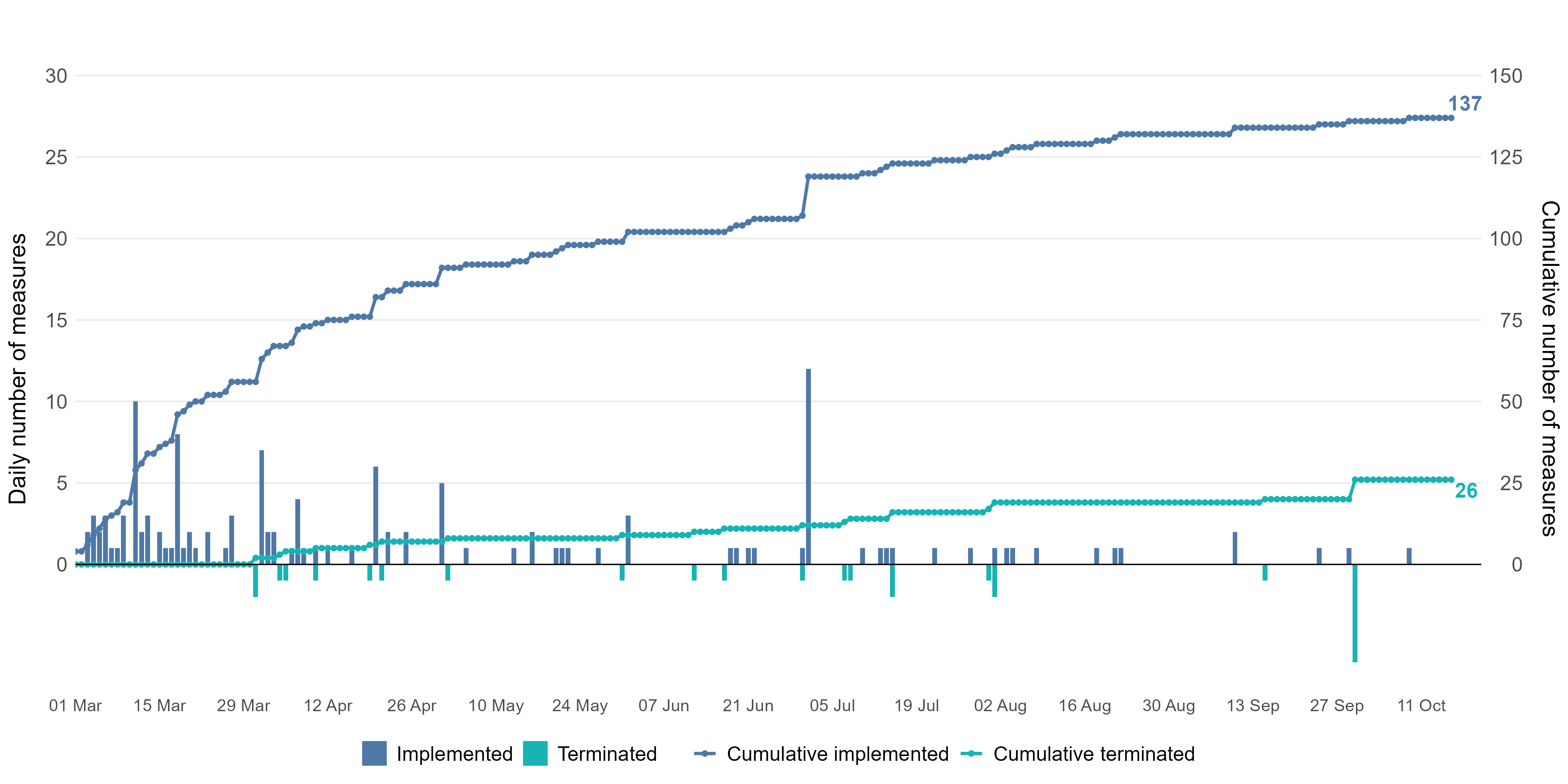
Source: WTO Secretariat, Trade Monitoring Database (TMDB), as of 16 October 2026.
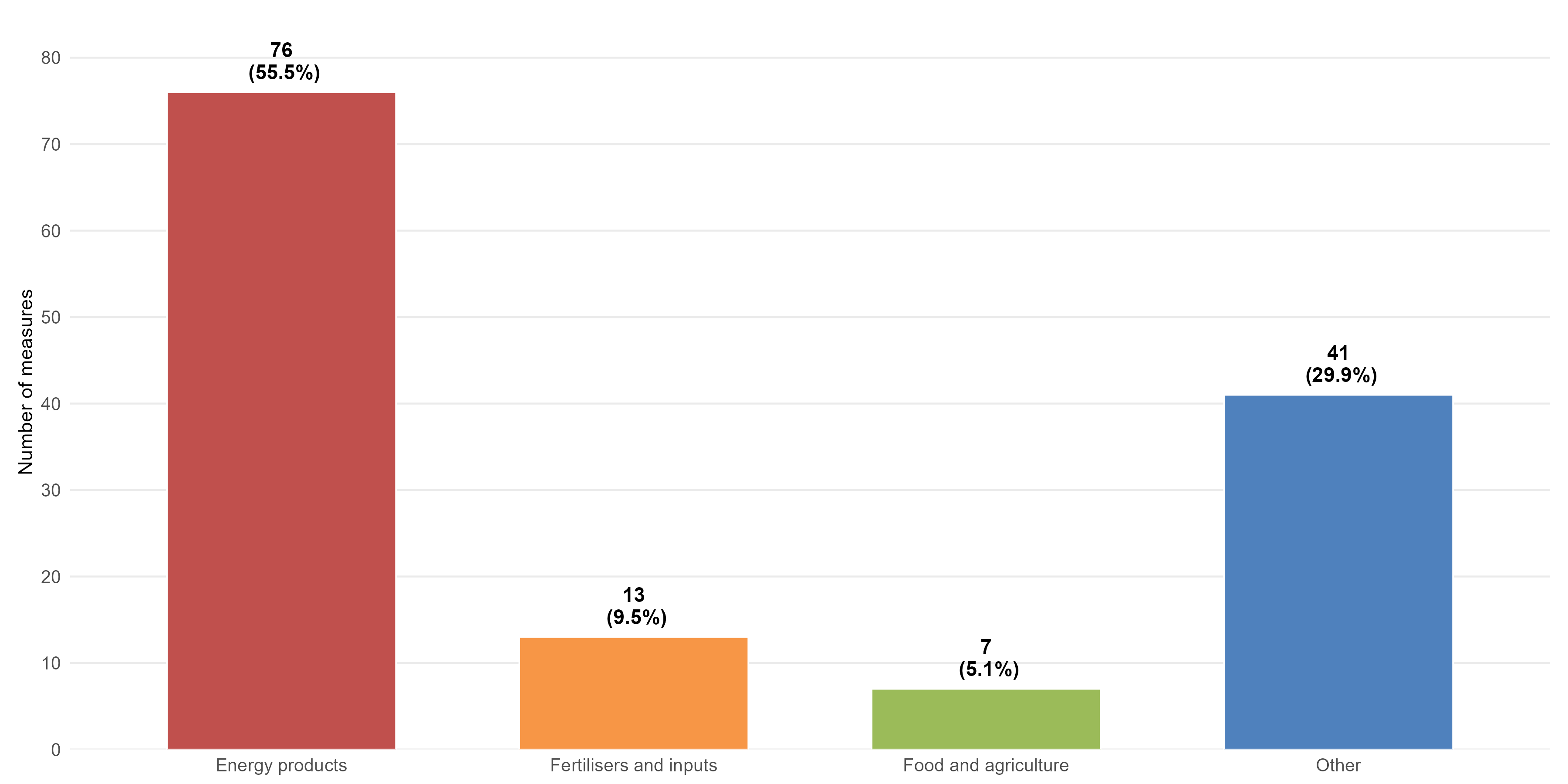
Source: WTO Secretariat, Trade Monitoring Database (TMDB), as of 16 October 2026.
Note: "Energy products", Harmonized System (HS) Chapter 27, include crude oil, gasoline, diesel, petrol, kerosene, aviation fuel, liquefied petroleum gas, liquefied natural gas, natural gas, petroleum products, and electricity. “Fertilizers and inputs”, HS Chapters 31 and selected products in Chapters 28 and 25, include urea, ammonium nitrate, ammonium sulphate, diammonium phosphate, monoammonium phosphate, nitrogen phosphorus potassium and nitrogen phosphorus fertilizers, nitrogenous fertilizers, sulfur, and sulfuric acid. “Food and agriculture” products include those defined under the WTO Agreement on Agriculture (AoA) (HS Chapters 1–24, excluding fish and fish products as well as certain products from HS Chapters 25–97), and “Other” include products outside the above-mentioned sectors and also cover broader measures that combine more than one sector.
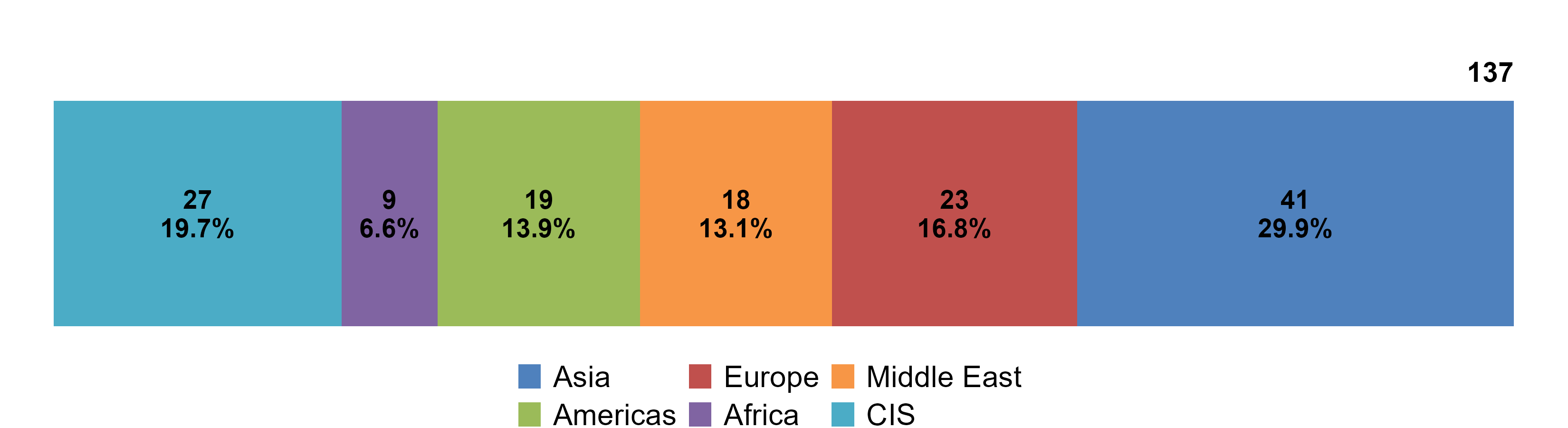
Source: WTO Secretariat, Trade Monitoring Database (TMDB), as of 16 October 2026.
Note: The geographical regions of Africa, the Americas, Asia, CIS (Commonwealth of Independent States, including certain associate and former member states), Europe and the Middle East are defined in accordance with WTO statistical definitions.
Trade and trade-related measures collected in the context of the WTO trade monitoring exercise that have a connection to the Strait of Hormuz situation, and presented in the Charts above, are listed in detail below.
The table provides detailed information on implemented trade and trade-related measures affecting goods, including their implementation and termination dates, descriptions, sources and products affected.
The list of measures is not exhaustive and constitutes an informal situation report aimed at enhancing transparency regarding trade and trade-related measures in the context of the Strait of Hormuz situation. It is updated regularly by the Secretariat. In case of any query, please contact the WTO Trade Monitoring Section at the following contact: [email protected].
Click any column header to sort by that column.
| Member / Observer | Implementation date | Description | Source | Termination date | Affected sectors | Affected products |
|---|
Note: “Energy products”, Harmonized System (HS) Chapter 27, include crude oil, gasoline, diesel, petrol, kerosene, aviation fuel, liquefied petroleum gas, liquefied natural gas, natural gas, petroleum products, and electricity. “Fertilizers and inputs”, HS Chapters 31 and selected products in Chapters 28 and 25, include urea, ammonium nitrate, ammonium sulphate, diammonium phosphate, monoammonium phosphate, nitrogen phosphorus potassium and nitrogen phosphorus fertilizers, nitrogenous fertilizers, sulfur, and sulfuric acid. “Food and agriculture” products include those defined under the WTO Agreement on Agriculture (AoA) (HS Chapters 1–24, excluding fish and fish products as well as certain products from HS Chapters 25–97), and “Other” include products outside the above-mentioned sectors and also cover broader measures that combine more than one sector.
Since March 2026, shortly after the closure of the Strait of Hormuz, leading global shipping companies have started to explore alternative logistics solutions to circumvent the Strait. They have introduced new multimodal transport services for the Gulf region, which are being operated through a combination of maritime shipping and inland logistics (road and/or rail), using regional gateway hubs and land bridge corridors to rebuild access to the Upper Gulf markets and maintain the connectivity between the Middle East and the rest of the world. Meanwhile, some regional logistics operators in the Middle East have expanded their services as well as their connectivity with other regions.
More detailsThis map illustrates the multimodal transport operations adopted by shipping companies and logistics operators since March 2026 to bypass the Strait of Hormuz.
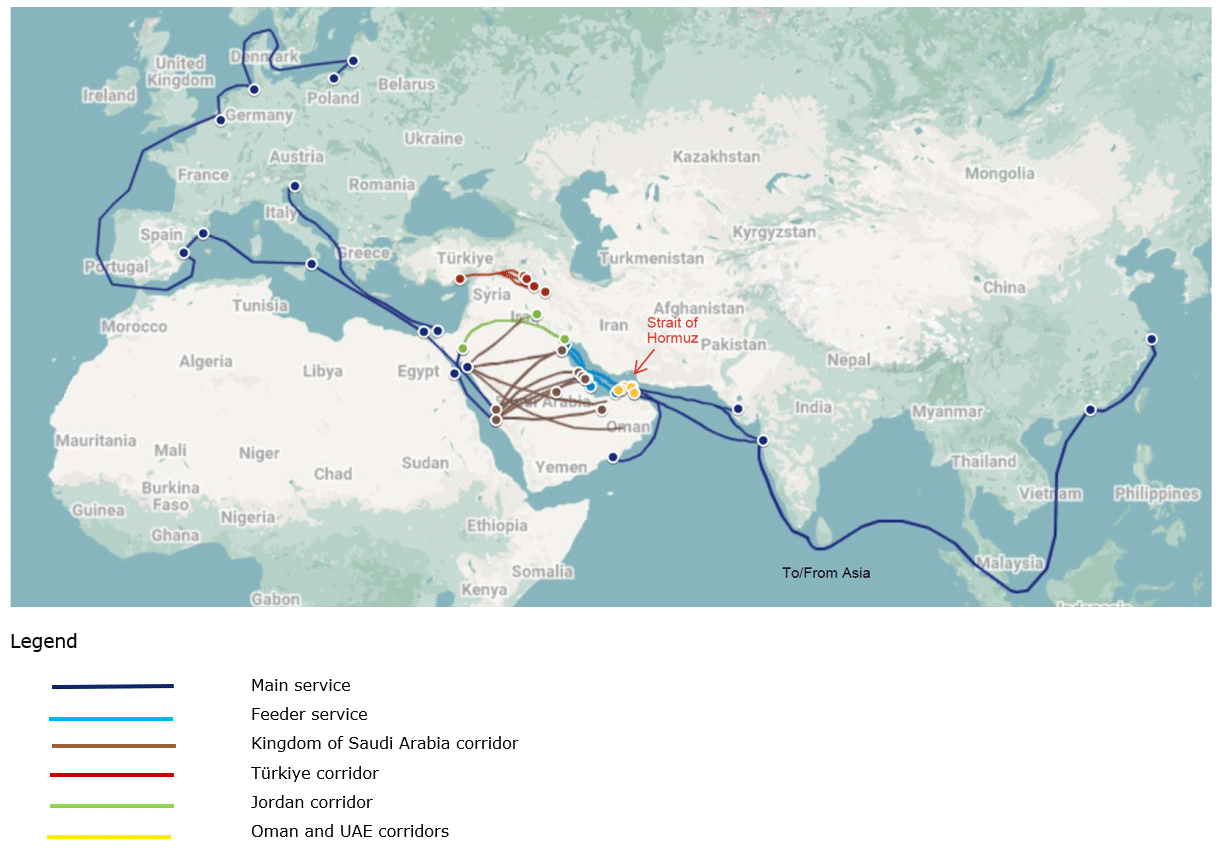
Disclaimer: The routes shown on this map are for illustrative purposes only and are intended to provide a general picture of alternative logistics corridors in the Middle East, based on publicly available information.
- Agricultural Market Information System (AMIS)
- IMF Global Policy Tracker
- IEA 2026 Energy Crisis Policy Response Tracker
- World Bank Group - Tracking Global Social Policy Responses to High Energy Prices
Disclaimer: The WTO does not take responsibility for the data posted by other organizations. Each organization has its own methodology, taxonomy and country categorization.